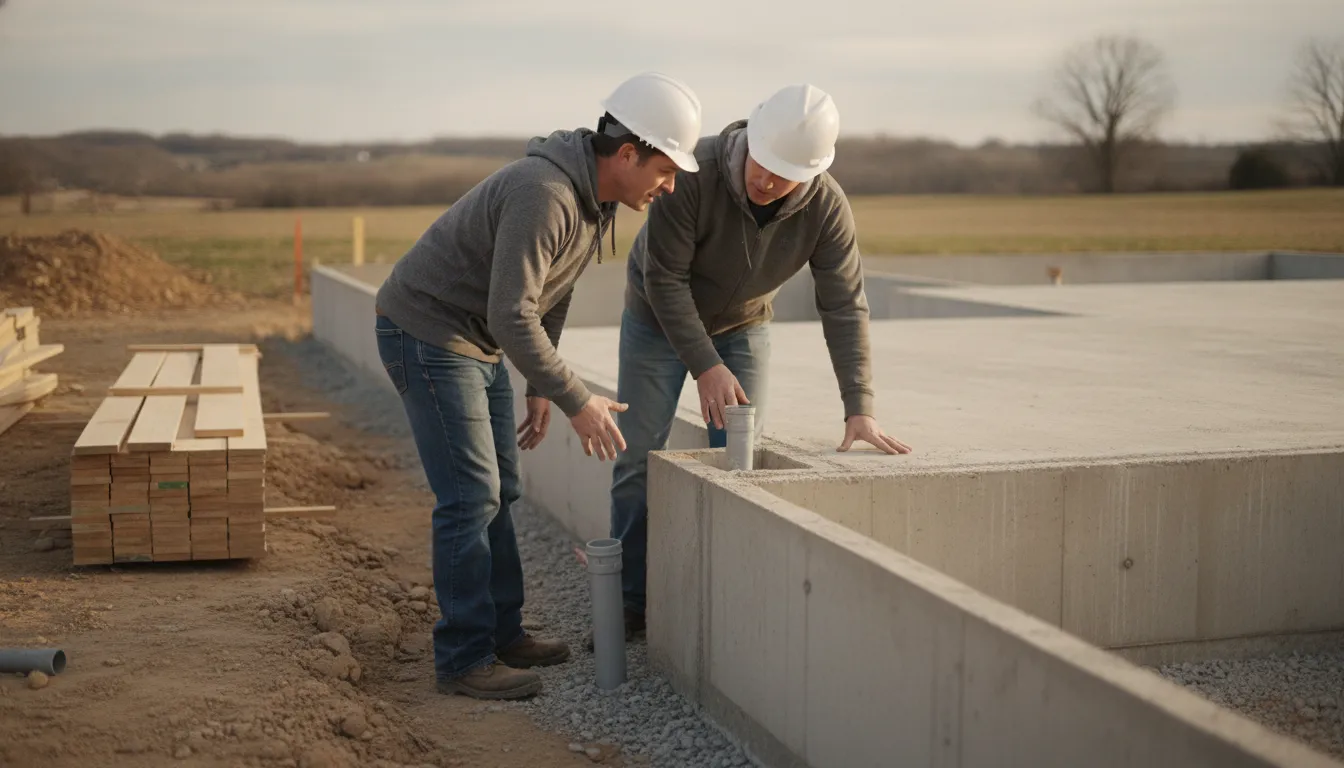
Start early. When you are designing a custom home in West Des Moines or elsewhere in the Des Moines metro, important decisions are not limited to finishes and floor plans. Soil conditions, foundation details, and indoor-air considerations can affect what should be coordinated before construction begins. Radon planning belongs in that same early conversation, while technical testing and system work remain with qualified specialists.
Effective custom home radon mitigation planning means identifying the questions that need resolution during design, confirming which decisions depend on the site and foundation, and coordinating qualified professionals before work starts. It is planning, not a substitute for radon testing, system design, installation, or post-construction verification.
That distinction reflects Clarity Before Construction: resolve the right decisions at the right stage, without presenting a builder as a testing or mitigation installer. A coordinated design-build process can help document those handoffs alongside the broader project decisions.
Understanding why timing matters is the first step toward a more deliberate pre-construction plan.
Why Radon Belongs in Early Custom Home Planning
Radon is a naturally occurring radioactive gas produced by the breakdown of uranium in rocks and soil. Outdoors, it is generally diluted in open air. Inside a home, however, it can accumulate, which is why indoor air considerations deserve a place in the planning conversation. The U.S. Environmental Protection Agency identifies radon exposure as a major lung-cancer risk, but this general health guidance does not establish the risk at any particular property.
Construction creates an opportunity to plan ahead
New construction allows radon-resistant features to be considered alongside the foundation, slab, and other assemblies rather than treated as an afterthought. The EPA notes that common materials and straightforward construction techniques can help reduce radon entry, and that including these features during construction typically costs less than addressing mitigation after a home is complete. Actual costs vary by project, foundation type, site requirements, and the scope confirmed by qualified professionals.
That timing matters in a custom home because decisions are interconnected. A future radon-related provision may affect coordination among the site plan, foundation design, mechanical planning, and finish expectations. Resolving those relationships before work begins can reduce avoidable changes later.
Planning is not the same as diagnosing a property
Early discussion should identify which questions require specialist input, what documentation should be retained, and when testing or verification belongs in the schedule. It should not assume that a West Des Moines or Des Moines metro property has elevated radon, or prescribe a system without site-specific evaluation.
Axiom's role is to coordinate the planning conversation through a unified architecture, interior design, and construction team. Radon testing, system design, installation, and verification should be handled by qualified radon professionals and applicable authorities. For technical background on new-home construction, see the EPA's radon-resistant construction guidance.
How Custom Home Radon Mitigation Planning Fits Before Construction
Custom home radon mitigation planning belongs in the decisions that shape a house before work begins on site. It is not a substitute for testing, system design, installation, or verification by a qualified radon professional. Instead, it gives the homeowner, design team, builder, and specialist a clear point in the process to identify what must be evaluated and resolved for the specific property.
Define the planning questions before the drawings are final
Start by asking which foundation conditions, site requirements, and construction details could affect the appropriate approach. The U.S. Environmental Protection Agency explains that radon-resistant construction techniques can vary by foundation type and building site. It also describes common features that can be incorporated during new-home construction, including a gas-permeable layer beneath the slab, pathways for soil gas, sealing, and provisions for moving gas away from the home when applicable. Those are technical design and installation matters for qualified professionals to determine, not a universal specification to copy into every plan.
For a homeowner in West Des Moines or elsewhere in the Des Moines metro, the useful pre-construction outcome is a documented set of questions and responsibilities. Confirm who will evaluate the site, who will advise on the foundation and slab details, what decisions need to appear in the construction documents, and how any future testing or activation will be handled. EPA notes that common materials and techniques can be used during new construction, but project conditions still govern the final solution.
Resolve the handoffs through one coordinated process
This is where radon planning fits naturally within Axiom's Project Resolution phase. Axiom's custom home planning process is designed to coordinate architecture, interior design, engineering, selections, and construction rather than leave critical decisions between disconnected teams. Project Resolution finalizes selections, engineering, and pricing before construction begins. It does not make Axiom a radon testing or mitigation installer. It creates a disciplined place to coordinate the specialist input and record the resulting project decisions.
That boundary reflects Axiom's pre-construction planning approach: Clarity Before Construction means understanding the scope and responsibilities before crews mobilize. The Axiom Method includes Discovery, Architectural Strategy, Project Resolution, Precision Construction, and Legacy Delivery. Radon-related questions should be resolved in the appropriate early phases, with qualified radon professionals and applicable authorities responsible for technical conclusions and verification.
What Should You Ask About the Site, Soil, and Foundation?
How will soil gases be considered before the foundation is built?
Radon is a radioactive gas produced by the natural breakdown of uranium in rocks and soil. Because soil gases can move beneath a home and accumulate indoors, the site conversation should begin with how the planned foundation will address the ground below it. The goal is not to assume that a West Des Moines or Central Iowa property has a particular risk, but to make the relevant questions visible while the design is still being resolved.
Ask which site information the qualified radon professional, architect, engineer, and builder need to review together. That may include the planned foundation type, areas where the home meets the soil, and how the design will allow soil gases to move away from occupied spaces. EPA identifies a gravel layer below the slab as one conceptual radon-resistant technique and describes it as an airflow or gas-permeable layer. Read the EPA overview of radon-resistant construction techniques for the terminology, then leave project-specific design to the appropriate specialists.
What changes when the foundation or site conditions change?
There is no single foundation detail that applies to every custom home. EPA notes that radon-resistant construction techniques vary with the foundation type and building-site requirements. Ask whether the planned slab, crawl space, basement, additions, or transitions between foundation areas create different planning considerations. Also ask how those decisions will be documented before construction begins, so the construction team is working from one coordinated plan.
These questions belong in Project Resolution, where design, engineering, selections, and pricing are clarified before work starts. A coordinated design-build team can organize the conversation, but radon testing, system design, installation, and verification should come from qualified radon professionals and applicable authorities. For broader context on radon and new-home planning, consult the EPA guidance for addressing radon when building a new home.
Passive or Active: Which System Decisions Belong in the Plan?
Start with the decision, not the equipment
Radon-resistant planning is less about choosing a device early and more about preserving the right options. The EPA explains that features can be incorporated during new-home construction, while the appropriate techniques vary with the foundation type and building site. That makes the passive-versus-active conversation a planning question for the project team, not a decision to improvise after finishes are complete.
A passive approach may be part of the initial construction strategy. An active-ready approach may preserve a clear path for qualified professionals to evaluate, connect, or activate additional components if later information supports that choice. The distinction should be documented with the home's foundation, site conditions, and future access in mind. EPA identifies common construction materials and techniques for this work, but the design and requirements for a particular home still need professional review.
Resolve responsibilities during Project Resolution
During Axiom's Project Resolution phase, the useful outcome is a written set of questions and responsibilities. Axiom can coordinate the conversation across architecture, interiors, and construction. Qualified radon professionals, the design team, builders, and applicable authorities should confirm the technical design, construction requirements, testing, installation, and verification that apply to the property. EPA also notes that builders can access radon-resistant new-construction training through state programs and private providers.
| Planning question | Who confirms it | When it belongs in the process |
|---|---|---|
| Which radon-resistant features fit the foundation and site? | Qualified radon professional, architect, and applicable authorities | Site and foundation planning |
| Should the home include a passive approach or remain active-ready? | Qualified radon professional with the design-build team | Before construction documents are finalized |
| What access, routing, or visual considerations should be coordinated? | Architect, builder, and qualified radon professional | Design coordination and selections |
| What testing, activation, installation, or verification is required? | Qualified radon professional and applicable authorities | Before construction and at the appropriate later stage |
For a custom home, these decisions belong in the plan because they touch structure, appearance, future access, and accountability. EPA's radon-resistant construction guidance is a useful reference, while property-specific conclusions remain the responsibility of qualified professionals and applicable authorities.
When Should Testing and Radon Specialists Be Involved?
Bring the conversation into pre-construction planning
Radon planning belongs in the conversation before construction begins, when site questions, foundation decisions, and project responsibilities can still be coordinated. For a custom home in the Des Moines metro, that does not mean assuming a property has elevated radon levels or prescribing a system from a distance. It means identifying what needs to be evaluated, who is qualified to evaluate it, and when the findings must inform the design and construction plan.
The U.S. Environmental Protection Agency notes that builders may find radon-resistant new construction training through state programs and private providers. That supports an early, informed discussion, but training availability is not the same as a claim about a particular professional's credentials. Homeowners should confirm qualifications and applicable requirements with the appropriate radon professionals and authorities.
Separate coordination from technical responsibility
Axiom's role is to coordinate the design-build process and help resolve the right decisions before work starts. Its team does not present itself as a radon-testing or mitigation specialist. Testing, system design, installation, and post-installation verification should be handled by qualified professionals and applicable authorities. Their findings can then be incorporated into the project record and coordinated with the broader plan.
That distinction creates a clearer handoff: the specialist owns technical testing and verification, while the design-build team makes sure relevant information is addressed alongside architecture, engineering, selections, and construction scheduling. As you evaluate potential partners, use these questions for your home builder to ask who coordinates specialist input, how decisions are documented, and when each responsibility transfers.
How Design-Build Coordination Keeps the Plan Clear
Keep decisions visible across the team
Custom home radon mitigation planning is easier to manage when the people shaping the home share the same decision record. Axiom Design-Build brings architecture, interior design, and construction together, so questions about the foundation, slab, penetrations, mechanical planning, and future access can be identified in the same pre-construction conversation. The appropriate radon professional still determines testing, system design, installation, and verification. Axiom's role is to help make those specialist decisions visible within the broader home plan.
That coordination matters in a West Des Moines or Des Moines-area custom home because a change in one discipline can affect another. The homeowner should know which items require specialist confirmation, when that confirmation is needed, and how the resulting direction is reflected in drawings, scope, and sequencing. This is the practical value of custom home planning process, rather than a separate technical system handled out of view.
Resolve the planning handoffs before construction
Axiom's brand promise, Clarity Before Construction, describes an approach in which important questions are addressed before work begins. During Project Resolution, selections, engineering, and pricing are finalized before construction starts. For radon-related planning, that can provide a clear place to document the specialist's recommendations, identify any design coordination needed, and confirm who owns each next step.
The Axiom Method has five phases: Discovery, Architectural Strategy, Project Resolution, Precision Construction, and Legacy Delivery. This article does not replace the full pre-construction planning approach; it shows how one technical consideration can be carried through a coordinated process. Homeowners can also review the Iowa custom home timeline to understand why resolving dependencies early supports a more orderly build.
A Practical Iowa Pre-Construction Radon Checklist
For a custom home in West Des Moines or the Des Moines metro, radon planning belongs in the project record before construction begins. The goal is not to diagnose a property from a distance. It is to identify the questions that need qualified answers, document the decisions, and make the handoff clear.
Resolve site and foundation questions
- Confirm the foundation context. Ask the design and construction team, along with the qualified radon professional, how the planned foundation and site conditions affect the appropriate radon-resistant approach. EPA notes that techniques vary with foundation type and building-site requirements. Review the EPA's radon-resistant construction guidance for the general planning framework.
- Identify the construction details that need coordination. Discuss the intended below-slab and foundation assemblies, penetrations, and any provisions that a qualified specialist recommends for the project. Do not turn a general checklist into a system specification. The right details depend on the home and should be confirmed before work starts.
Coordinate specialists and record decisions
- Name the responsible professionals. Establish who will advise on testing, system design, installation, and verification. Axiom coordinates the design-build process, but it does not provide radon measurements or install mitigation systems. Those technical responsibilities belong with qualified radon professionals and applicable authorities.
- Capture the decisions in the project documents. Record the selected approach, responsible parties, assumptions, open questions, and the point at which each item must be confirmed. This is the practical value of Clarity Before Construction and Axiom's Project Resolution phase, where selections, engineering, and pricing are resolved before construction begins.
- Define the testing and verification handoff. Before the build is complete, confirm who will arrange any recommended testing, interpret the results, and verify completed work. Keep that closeout separate from the builder's general construction documentation.
For homeowners comparing builders, these are useful questions for your home builder. Axiom's role is to keep the conversation coordinated and documented while qualified specialists handle radon-specific advice.
Frequently Asked Questions
What is radon gas?
Radon is a radioactive gas produced by the natural breakdown of uranium in rocks and soil. It can move through soil and accumulate indoors, so questions about site conditions, foundation design, testing, and verification should be addressed with qualified radon professionals. The EPA explains the basics of radon in new-home construction.
Is it safe to live in a house with a radon mitigation system?
A mitigation system is intended to reduce indoor radon, but safety cannot be assumed from the presence of equipment alone. Testing, system design, installation, and post-installation verification should be handled by qualified radon professionals, using applicable guidance and project-specific results.
What states are worst for radon?
State rankings are not a substitute for evidence from a particular property. Radon conditions can vary by site, foundation, and building characteristics, including within the Des Moines metro. Ask a qualified professional or applicable authority which testing and planning steps fit your location.
When should radon planning begin for a custom home?
Begin during design and pre-construction, before foundation and slab decisions are finalized. EPA guidance notes that radon-resistant features can be incorporated during new-home construction and that techniques vary with foundation type and site requirements. Your builder can coordinate the planning record, while qualified radon professionals confirm technical decisions.
Schedule a Consultation for Clearer Pre-Construction Decisions
Planning a custom home in Iowa involves decisions that are easier to evaluate when architecture, interiors, construction, and specialist coordination are considered together. A conversation with Axiom Design-Build can help connect radon planning with the broader pre-construction process, while qualified professionals address testing and technical requirements.
Schedule a Consultation to discuss your ideas and next steps.