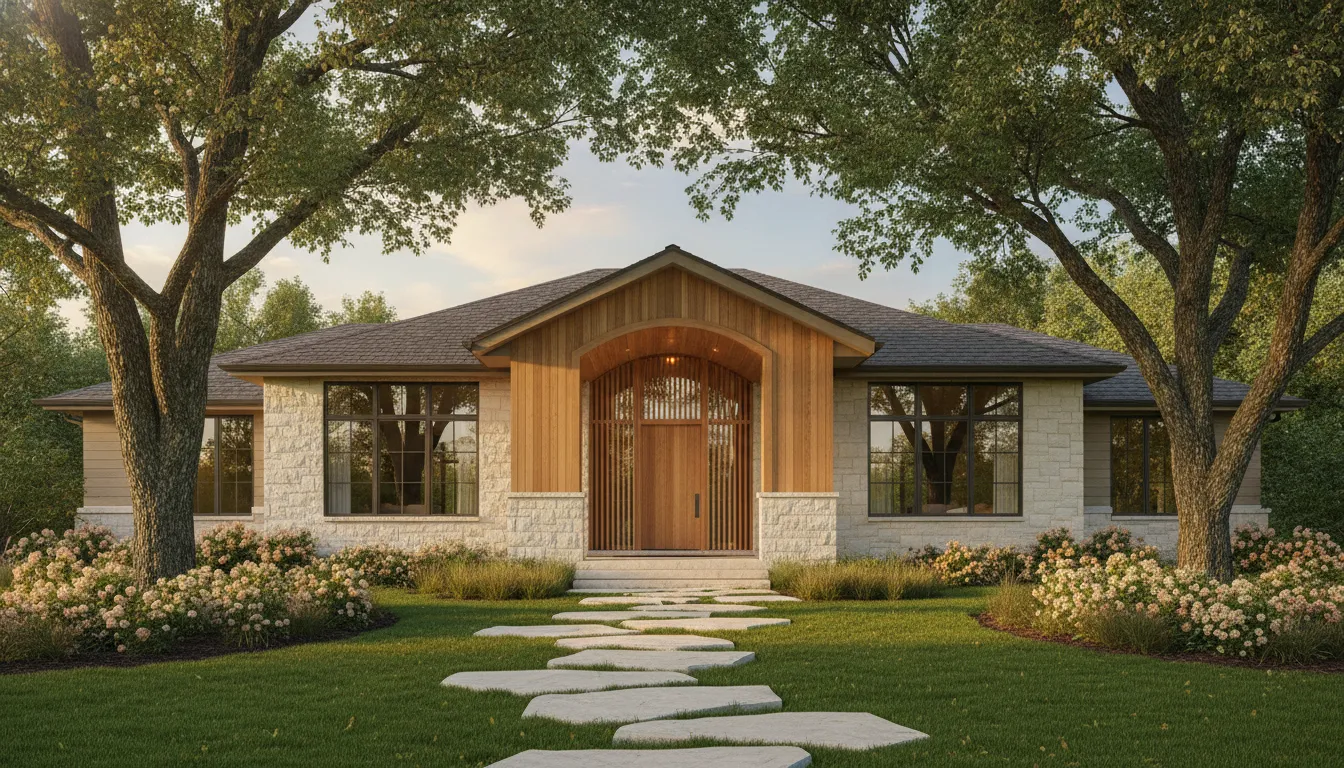
A builder for custom homes should be able to show how the house will be designed, priced, and delivered before construction starts. A portfolio photo is not that proof. The useful record is a short file. It should show who may do the work in Iowa, who carries the insurance, what the written scope includes, and which finished homes are close to yours. That file is the practical way to compare firms without guessing from a brochure. It fits homeowners in West Des Moines, Des Moines, Johnston, Waukee, Urbandale, Ankeny, and nearby Central Iowa communities.
Call (515) 257-6131 to Schedule a Consultation
Axiom Design-Build is a West Des Moines design-build firm. Architecture, interior design, and construction sit with one team, and the work is organized so selections, engineering, and pricing are resolved before the build. The notes below are the documents worth asking any builder for custom homes to put on the table. They are not a price list. Axiom does not publish a standard cost per square foot. Investment is set from the site, the scope, the engineering, and the selections.
What should a builder for custom homes put in writing?
Start with the paper, not the personality of the first meeting. The National Association of Home Builders tells buyers to shop for the builder as carefully as the house. Expect a written estimate, a contract that states the work, a payment schedule, insurance, and a warranty. A firm that says a contract will not be necessary is not ready for a custom home.
For a custom project, the written record has to go further than a subdivision contract. It should name the site, the living priorities, and the included scope. It should also name the open selections and the point at which the investment is fixed enough to start. If those items live only in a conversation, they will be renegotiated in the field.
Ask for the current versions, not a sample from an older job. A useful packet usually includes:
- The legal name of the firm and the person who will be accountable for the project.
- Proof of Iowa contractor registration, when the work requires it.
- Certificates of insurance that name the project or confirm the coverage applies to it.
- A written scope that separates included work from work the owner will handle.
- A description of how selections, engineering, and pricing are closed before construction.
- A warranty statement and the path for items found after move-in.
Keep the packet in one place. When two firms describe themselves in similar language, the documents are what you can actually compare.
Which registrations and insurance records belong in the file?
Iowa requires construction contractors to register with the state before they work. The Iowa Department of Inspections, Appeals, and Licensing maintains contractor registration so owners can confirm a firm is registered and can look up a record. Registration is not a design award. It is the baseline that the company is known to the state and is meeting the registration rules that apply to the work.
Ask for the registration in the name that will sign the contract. A parent brand, a former name, or a trade partner's registration is not a substitute. Axiom Design-Build is the current name of the firm. Earlier projects, including Grand Revival and Park Life, were completed under the historical name Alair Des Moines. If you are reviewing those houses, the project page should say so plainly, and the contract in front of you should still be in the name you are hiring now.
Insurance belongs in the same folder. Ask for certificates that show general liability and workers' compensation, and ask who supplies them for the trades on your job. You are not looking for a promise that a claim will never happen. You are looking for a current certificate, the covered parties, and a person who can explain what the policy does and does not cover. If a builder cannot produce the certificate, pause the conversation until they can.
Local permits are separate from state registration. A custom home in Johnston, Waukee, or a rural lot outside a city will move through different review paths. The builder should say who pulls the permits and which drawings the reviewer will see. They should also name site conditions, such as drainage, soils, or access, that must be resolved before those drawings go in. That answer belongs in the file with the registration, not in a later email.
How do you read scope, selections, and the investment together?
A custom home goes wrong when the scope, the selections, and the money are treated as three separate conversations. The scope says what will be built. The selections say what it will be built with. The investment is the result of those two, plus the site and the engineering. A number offered before those are known is a guess, and a guess is not a useful way to choose a builder for custom homes.
Read the scope for boundaries. A clear scope says which rooms and site work are included, which allowances are still open, and which items the owner is bringing. It also says what happens when a selection changes after the price is set. The goal is not to forbid changes. The goal is to see the change before it becomes a surprise in the schedule.
| Document | What it should show | Question it answers |
|---|---|---|
| Written scope | Included rooms, site work, and owner-supplied items | What are we actually building? |
| Selection log | Finishes, fixtures, and items still open | Which choices are settled, and which can still move the investment? |
| Engineering notes | Structure, mechanical, and site constraints tied to the plan | Will the design survive the lot and the Iowa climate? |
| Pricing summary | How the investment was built from scope and selections | Is the number tied to this house, or to a generic allowance? |
| Allowance list | Items priced as placeholders, with what is and is not included | Where could the project still change after we think it is resolved? |
Axiom's contact form asks about project type and a broad investment range, from a smaller renovation through custom homes above two million dollars. That range is a way to start a conversation. It is not a quote. The real number comes later, after Discovery, architectural strategy, and project resolution have tied the plan to the site and the selections. If a firm offers one price for every house of a given size, you do not yet have a custom-home proposal.
Two contract structures show up often in this market. One states a price for a defined scope. The other bills the cost of the work plus a fee. The fixed price and cost plus comparison is the place to study that choice. For this file, the point is simpler: whichever form you use, the scope and the selections have to be written down before the form means anything.
What project proof is worth more than a rendered image?
A rendering shows intention. A finished house shows whether the firm can carry intention through construction. Ask for two or three completed projects that share something with yours. Look for a similar site, a similar level of finish, or a similar problem, such as a renovation rather than a new build. Then ask to see the house or to speak with the owner.
Look at how the project is described, not only how it is photographed. Axiom's featured projects are a short set, and each one states the kind of work it was. Grand Revival is the Meadow Springs show home in Johnston, a traditional Tudor of about 5,523 square feet, planned and built for the 2025 Home Show Expo. Park Life is a full renovation of a 1950s house in Greenwood-Ashworth Park, about 5,011 square feet, reworked with design partners after decades of awkward additions. Those two houses answer different questions. One shows a new custom home carried from the firm's own standard. The other shows a renovation that had to recover a plan.
Use the same test with any builder. A lake house, a tight urban lot, and a suburban new build are not interchangeable proof. If the only examples are a different building type, say so in your notes and keep looking. Reviews can support what you see, and the separate guide to custom home builder reviews covers how to read them. The file you are building here still needs the house itself, not only the rating.
Awards are context, not a substitute for the walk-through. Axiom's recorded recognition includes eight of eleven awards at the 2025 Home Show Expo, including Best in Show and Best Livability. Andrew Long also received Remodeler of the Year from the Home Builders Association of Greater Des Moines. Those facts tell you the work has been judged. They do not tell you whether the firm is the right fit for your lot. Andrew Long has led the company since he founded it in 2015, and the team page is the place to see who is accountable today.
How should the file connect to one accountable team?
Custom homes fail in the gaps between people. An architect's drawing, an interior selection, and a builder's price can each be reasonable and still conflict. Before you hire, write down who owns each of those decisions and who you call when they conflict. One name, or one firm, should be able to answer.
That is the practical difference in a design-build engagement. At Axiom, architecture, interior design, and construction are one coordinated team. The custom home builder work on the design-build page covers both new custom homes and high-end renovations, including whole-home, kitchen, bathroom, addition, and exterior work. You should still ask how a specific project will be staffed. A promise of unity is only useful if you know who leads Discovery, who closes the selections, and who stays with the job through delivery.
The sequence Axiom uses is the Axiom Method: Discovery, Architectural Strategy, Project Resolution, Precision Construction, and Legacy Delivery. This article is not the tour of those phases. The point for a hiring file is the third phase. Project Resolution is where selections, engineering, and pricing are closed before construction. If a builder cannot show you the equivalent moment, the moment when the plan and the investment match, you are being asked to start without a resolved scope.
Communication belongs in the same note. Ask how often you will hear from the team, what a decision looks like when it is final, and how an open item is tracked. White-glove updates are a standard worth testing. A simple way to test them is to notice whether the first packet you requested actually arrives, complete, in the name of the firm you would hire.
What should you do with the file before the first consultation?
You do not need finished drawings to start. You do need enough clarity that the first meeting is about your house, not about whether the firm is organized. Bring the site information you have, a short list of how you live, and any images that show a quality level rather than a floor plan you expect to copy. Then bring the list of documents you expect to see in return.
- Confirm the firm's current legal name and Iowa contractor registration.
- Ask for insurance certificates and the warranty you would actually receive.
- Request two completed projects close to your scope, with a way to see the work or talk with the owner.
- Ask when selections, engineering, and the investment will be resolved relative to the start of construction.
- Write down who is accountable for architecture, interiors, and construction if those roles ever disagree.
If you are still deciding whether to build new or renovate, settle that question against the property before you treat any proposal as final. The guide on what to plan before you build a house is the broader planning piece. Use it to prepare the site and priority questions. Use this file to test the builder.
A first consultation should leave you with a next step, not a generic brochure. At Axiom, that step is a conversation about the vision you already have, including rough ideas, and a map of what has to be resolved next. You can reach the West Des Moines studio at 5550 Wild Rose Lane, Suite 4130, call (515) 257-6131, or send a note through the contact form. Bring the file. A serious builder for custom homes will recognize it as the start of the work, not as a test to be waved off.
Frequently asked questions
Is a builder for custom homes different from a production builder?
Yes. A production builder repeats a plan across many lots. A builder for custom homes designs the house around a specific site and a specific way of living, then prices that scope. The documents you ask for should show that difference: a scope and selections for your house, not a model-home package with a short option list.
Do I need architectural plans before I talk with a builder?
No. Plans can help, but they are not required to begin. What helps more is a clear description of how you live, the property you have or are considering, and the level of finish you expect. The design can then be resolved with the people who will also build it. That is better than handing over a finished set that still has open engineering and cost questions.
Should Iowa contractor registration replace references?
No. Registration confirms the firm is registered with the state for the work that requires it. References and a walk through a finished house tell you how the work actually went. Collect both. Neither one covers insurance, the written scope, or the warranty, so those stay on the list.
Can the same file be used for a renovation?
Yes, with one change. Ask for a completed renovation of similar age and complexity, not only a new house. A whole-home renovation has to reconcile an existing structure, which a new-build portfolio will not show. The registration, insurance, scope, and accountability questions stay the same.
Why will a careful builder not give a price per square foot?
Because the site, the structure, the mechanical systems, and the selections change the investment. A single rate hides those differences and makes two houses look comparable when they are not. A useful figure is a project-specific summary tied to a written scope. If you do not have that scope yet, you are not late. You are simply not at the pricing step.
Call (515) 257-6131 to Schedule a Consultation
Bring your site, your priorities, and the questions still open. Axiom Design-Build will help you shape the vision and map the decisions that should be resolved before construction begins.